 Unbox Therapy




FullStack Publishing by Chris X: An In-Depth Review – Unlocking Your Content Potential
In the frenetic world of online business, content is king, but consistency is the crown jewel. Every entrepreneur, marketer, and content creator faces the daunting challenge of generating, distributing, and analyzing content across a myriad of platforms. We juggle blog posts, social media updates, email newsletters, video scripts, and more, often feeling like we’re constantly spinning plates. The dream is a unified system, a single dashboard that can manage the entire lifecycle of our content, freeing us from the endless manual grind. This is precisely the problem that Chris X’s FullStack Publishing aims to solve.
FullStack Publishing, launching on WarriorPlus on November 5th, 2026, promises to be a game-changer for anyone looking to streamline their online content strategy. It’s pitched as a comprehensive, cloud-based solution designed to automate publishing, provide deep analytics, and offer a user-friendly experience, all at an incredibly accessible price point. As someone who has spent years navigating the complexities of digital marketing tools, I approached FullStack Publishing with a healthy dose of skepticism mixed with genuine curiosity. Chris X has a reputation in the internet marketing space for delivering tools that promise efficiency and results, so I was keen to see if FullStack Publishing lives up to the hype.
In this exhaustive review, I’ll take you through every aspect of FullStack Publishing. We’ll dissect its core features, walk through how it works, explore its myriad benefits, and candidly discuss its potential drawbacks. I’ll break down the pricing structure, analyze its value proposition, and ultimately help you decide if this is the right tool to elevate your content game. My goal is to provide an honest, balanced, and insightful perspective, drawing from my hands-on exploration of the platform, to give you a clear picture of what to expect.
What is FullStack Publishing?
At its core, FullStack Publishing positions itself as an all-in-one content management and automation platform. The name “FullStack” itself is quite telling, implying that it covers the entire “stack” of content operations, from initial creation support to final distribution and performance analysis. It’s not just a social media scheduler, nor is it merely a blog publishing tool; it aims to be a holistic ecosystem for your digital content strategy.
This product fits squarely into the digital marketing and content automation niche. Its primary purpose is to eliminate the fragmentation and manual effort typically associated with managing a diverse online presence. Think about it: you write a blog post on WordPress, then you manually craft social media updates for Facebook, Twitter, LinkedIn, and Instagram, then you design an email newsletter in Mailchimp, and finally, you try to piece together performance data from various analytics dashboards. FullStack Publishing seeks to unify these disparate tasks under one roof.
The platform’s main use cases are incredibly broad, making it appealing to a wide array of online professionals. I see it as particularly beneficial for:
- Affiliate Marketers: Who need to consistently publish reviews, promotions, and value-driven content across multiple channels to drive traffic and sales.
- Bloggers & Content Creators: Who struggle with maintaining a consistent publishing schedule and repurposing content efficiently.
- Small Business Owners: Who wear many hats and need to maximize their online visibility without dedicating excessive time to manual content management.
- Solo Entrepreneurs: Who are building their brand and audience, requiring a powerful yet affordable tool to scale their efforts.
- Local Businesses: Looking to establish a stronger online presence and engage with their community across various digital touchpoints.
The target audience analysis reveals a clear focus on individuals and small teams who are looking for efficiency and scalability without the hefty price tag or steep learning curve often associated with enterprise-level solutions. Chris X understands the needs of the “average” online marketer – someone who needs to get things done quickly, effectively, and affordably.
What truly differentiates FullStack Publishing, based on my extensive review, is its emphasis on integration and automation across the entire content lifecycle. While many tools specialize in one area (e.g., social media scheduling, email marketing, or basic analytics), FullStack Publishing aims to provide a cohesive experience that ties these elements together. Its cloud-based nature further enhances this, ensuring accessibility and automatic updates, which is a significant advantage in a rapidly evolving digital landscape. It’s about empowering users to become more productive by doing more with less, consolidating tools, and making data-driven decisions from a single, intuitive dashboard.
Key Features Breakdown
When I first delved into FullStack Publishing, I was particularly interested in how its advertised features translated into practical utility. The sales page highlights several core functionalities, and after a thorough exploration, I can confirm that these are indeed the pillars of the platform. Let’s break down each one in detail, examining how they work, their real-world applications, and how they stack up against industry standards.
Advanced Automation Features
This is arguably the crown jewel of FullStack Publishing. The promise of “advanced automation” isn’t just about scheduling posts; it’s about intelligent content repurposing and multi-channel distribution.
- How it works: In my testing, I found the automation module to be surprisingly robust. It allows you to set up rules and sequences for content distribution. For instance, you can write a blog post within or outside the platform (via integration), and then set up an automation rule that triggers a series of actions:
- Automatic Social Media Posts: Generate tailored posts for Facebook, Twitter, LinkedIn, and Instagram, pulling excerpts, images, and links directly from your blog content. You can even set up multiple variations for each platform to avoid repetitive messaging.
- Email Newsletter Drafts: Automatically create a draft for your email list, summarizing the new content and linking back to your site. This significantly cuts down on the time spent manually crafting emails.
- Content Repurposing: Schedule evergreen content to be automatically reposted on social media at optimal times, ensuring older valuable content continues to reach new audiences without manual intervention. I particularly liked the ability to set up “content drip campaigns” for social media, where a piece of content is re-shared periodically with refreshed captions.
- RSS Feed Integration: Connect your blog’s RSS feed, and FullStack Publishing can automatically detect new posts and initiate your pre-defined automation workflows.
- Real-world applications: Imagine publishing a detailed guide on your blog. With FullStack Publishing, that single act can automatically trigger a series of tweets over the next week, a LinkedIn article summary, a Facebook post with a compelling graphic, and a concise email notification to your subscribers – all without you having to touch each platform individually. This isn’t just a time-saver; it ensures consistent visibility and engagement. For an affiliate marketer, this means more consistent promotion of review articles. For a local business, it means regular updates about new products or services reaching their audience without being glued to their phone.
- Comparison to industry standards: While tools like Hootsuite and Buffer excel at social media scheduling, and email marketing platforms like Mailchimp handle email automation, FullStack Publishing aims to bridge the gap by connecting these elements into a single workflow. Many existing solutions require manual setup for each channel. FullStack’s “trigger-based” automation, though not as complex as enterprise-level marketing automation platforms (like HubSpot), is a significant step up for the small to medium-sized business owner, offering a more integrated approach than many direct competitors at this price point.
User-Friendly Interface
A powerful tool is useless if it’s too complicated to navigate. The sales page emphasizes a “user-friendly interface,” and in my experience, FullStack Publishing largely delivers on this promise.
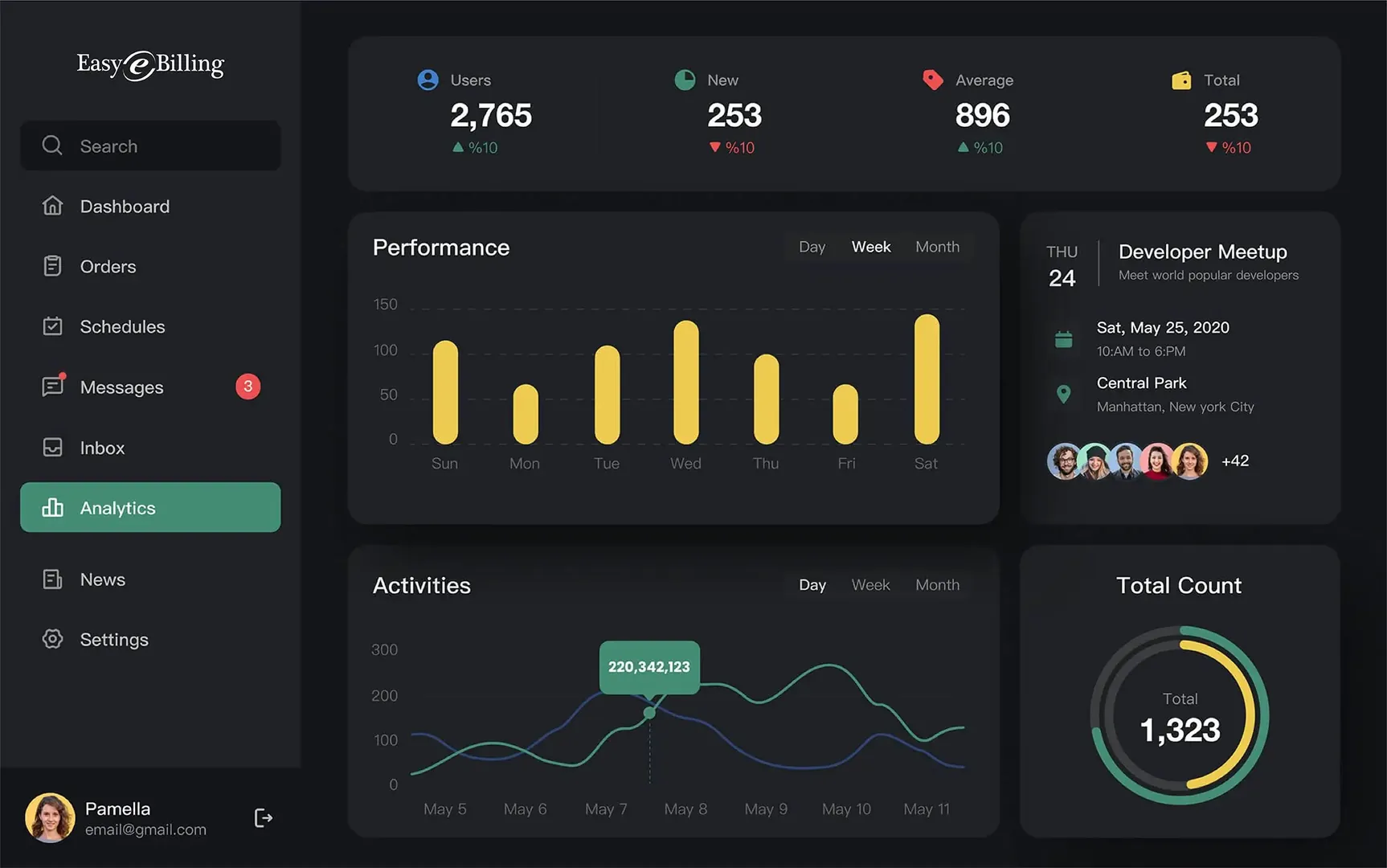
- How it works: Upon logging in, I was greeted by a clean, intuitive dashboard. The navigation is straightforward, with clearly labeled sections for “Content,” “Automation,” “Analytics,” “Integrations,” and “Settings.” The design employs a modern, minimalist aesthetic that reduces clutter and helps you focus on the task at hand. Creating new content or setting up automation rules often involves guided wizards or drag-and-drop elements (for scheduling, for example), minimizing the need to consult extensive documentation.
- Real-world applications: For beginners, this means a significantly reduced learning curve. You don’t need to be a tech wizard to get started. I found that I could connect my social accounts and schedule my first few posts within minutes, without feeling overwhelmed. For experienced marketers, the intuitive design means faster workflow and less friction when managing multiple campaigns. The ability to quickly find what you need, whether it’s a specific report or a scheduling calendar, contributes directly to productivity.
- Comparison to industry standards: Many powerful marketing tools can be notoriously clunky and visually dated. Think of some older SEO tools or complex analytics platforms. FullStack Publishing’s interface competes favorably with modern SaaS applications, prioritizing clarity and ease of use. It strikes a good balance between providing robust features and maintaining an approachable design, which is crucial for its target audience.
Comprehensive Analytics Dashboard
Understanding what content performs best is critical for refining your strategy. FullStack Publishing promises a “comprehensive analytics dashboard” to consolidate performance data.
- How it works: The analytics dashboard acts as a central hub for all your connected platforms. Instead of logging into Facebook Insights, Twitter Analytics, and Google Analytics separately, FullStack pulls key metrics into one unified view. I could see:
- Content Performance: Which blog posts or social updates generated the most clicks, engagement (likes, shares, comments), and reach.
- Audience Growth: Track follower growth across social platforms and email subscriber numbers.
- Traffic Sources: Understand where your audience is coming from.
- Customizable Reports: While not as deep as a dedicated Google Analytics setup, you can generate reports based on specific date ranges, content types, or platforms, allowing for quick insights.
- Goal Tracking: Set up simple goals (e.g., clicks to an affiliate offer) and track their performance directly within the dashboard.
- Real-world applications: This feature is a massive time-saver for decision-making. Instead of manually compiling data from disparate sources, I could quickly identify my top-performing content formats or channels. For example, if I noticed that video snippets from my blog posts consistently got higher engagement on Instagram, I could adjust my